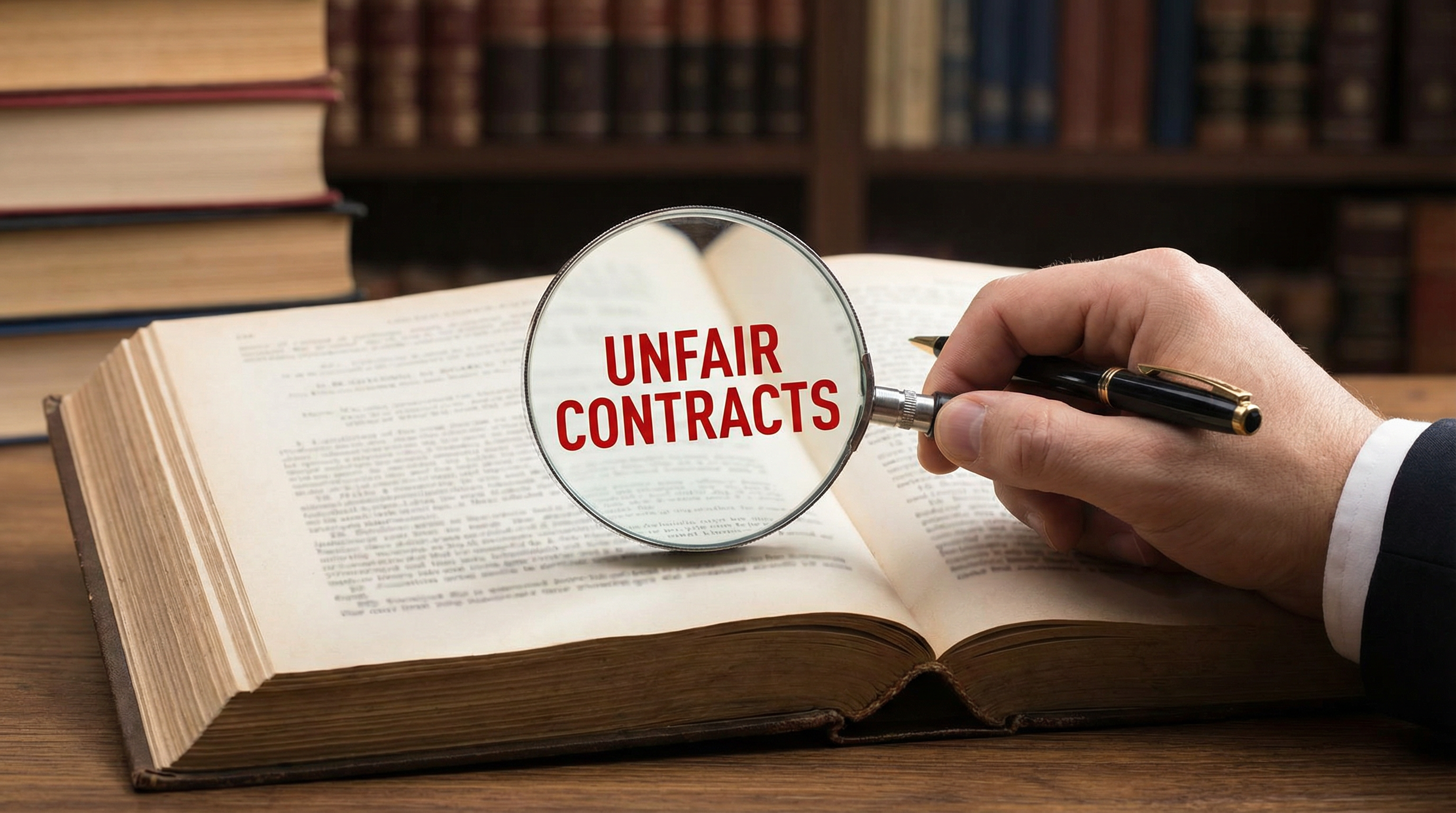
You Might Already Be Signing Unfair Contracts. Here's Why That Matters.
If you're a contractor or supplier working with a big corporate, you've probably signed terms you didn't love. Maybe you pushed back. Maybe you didn't. Either way, there's a good chance some of those terms are unenforceable.
Changes made to the Australian Consumer Law in November 2023 have given the unfair contract terms regime some real teeth. Ultimately they are designed to give small businesses more protection when faced with standard form contracts from the big guys.
Here's what you need to know, and why it's important for your business.
What is the Unfair Contracts Regime?
If you're a small business supplying to mining, resources, or construction, you've probably signed standard form contracts. They come to you fully drafted, ready for you to sign.
The Unfair Contract Terms regime exists specifically for this situation. It targets standard form contracts where one party (typically the smaller one) had no genuine opportunity to negotiate, and the terms create a significant imbalance.
A term is unfair if it benefits one party at the expense of the other, isn't reasonably necessary to protect that party's legitimate interests, and would cause detriment if enforced. Think unilateral variation rights, one-way indemnities, unreasonable time bars on claims, or termination clauses that only work in one direction. These types of terms heavily skew risk - unfairly - to you.
Since November 2023, the regime has real consequences. If a Court finds that the terms are unfair, they are void and cannot be enforced. On top of that Courts can impose penalties of up to $50 million per contravention.
Why is it important for your business?
Because terms you assumed were locked in might not be enforceable. The liability cap that only protects the principal? The clause that kills your claim if you're a day late with notice? Those are the kinds of provisions the regime targets.
The regime applies where at least one party has fewer than 100 employees or annual turnover under $10 million, or the contract price is under $5 million.
This isn't theoretical, it's being used and the penalties mean head contractors, principals and the big guys are paying attention.
How do you use this?
Two ways.
First, before you sign. Flagging a potentially unfair term during negotiation gives you genuine leverage. The penalties are large enough that counterparties would rather amend than risk it. It's cheaper for you to fix a clause now than fight about it later.
Second, after a dispute. If you're already locked into a contract and a term is working against you, the regime may give you an avenue. If a court finds the term unfair, it's treated as though it never existed.
Either way, you need to know which clauses are genuinely unfair and which ones are legitimate risk allocation. If you Get that wrong and you either leave protection on the table or waste leverage on the wrong argument.
Can Nex Legal help?
If you're about to sign a contract and something doesn't sit right, you're feeling under pressure to "take it or leave it", get in touch. A review takes less time than you think and costs less than getting it wrong.


